


Légère European Cut Bass Clarinet Reeds
Légère European Cut Bass Clarinet Reeds
Couldn't load pickup availability
Légère reeds have come a LONG way since I first tried them about 15 years ago, and even since I made a video about them a few years ago. In that video, which you can see below, when I played the Légère up against D'Addario, Forestone, and Silverstein, the Légère European Cut came out on top.
Many, many, many of you have written me asking if I would carry these reeds, and the answer is, of COURSE I can carry these reeds. So here they are.
Now, I do not carry all of the Légère varieties — I'm not a fan of the Classic or the Signature cuts at all — but I do like these European Cut reeds, and the new French Cut Bass Clarinet/Tenor Sax reeds.


- 5 stars: 3 (100%)
- 4 stars: 0 (0%)
- 3 stars: 0 (0%)
- 2 stars: 0 (0%)
- 1 star: 0 (0%)
This has become my co-favorite reed. I'm writing this review to help folks decide if this reed or the Legere French Cut Tenor Sax reed is for them. There is one thing the French Cut can do that this reed can't: offer such a dark, robust tone in the chalumeau register. For my community band playing, where my role is to provide support for the ensemble with a powerful, dark sound, the French Cut is the reed.
But in playing solo, duet, or chamber-style music with lots of work in the clarion, I've come to be a huge fan of the European Cut. It absolutely sings above the break. No other reed comes close to giving me such a clean, unstrained sound in the clarion. This reed finally gave me the sound I was looking for up there. If you want to improve your sound above the break, you've simply got to try this reed. It sounds a little thinner in the throat tones and less powerful in the lowest notes than the French Cut, but for some pieces, it's absolutely worth the trade-off. It's also a much more flexible reed... I find I can bend pitch and tone quality much more easily with this reed than the F.C.
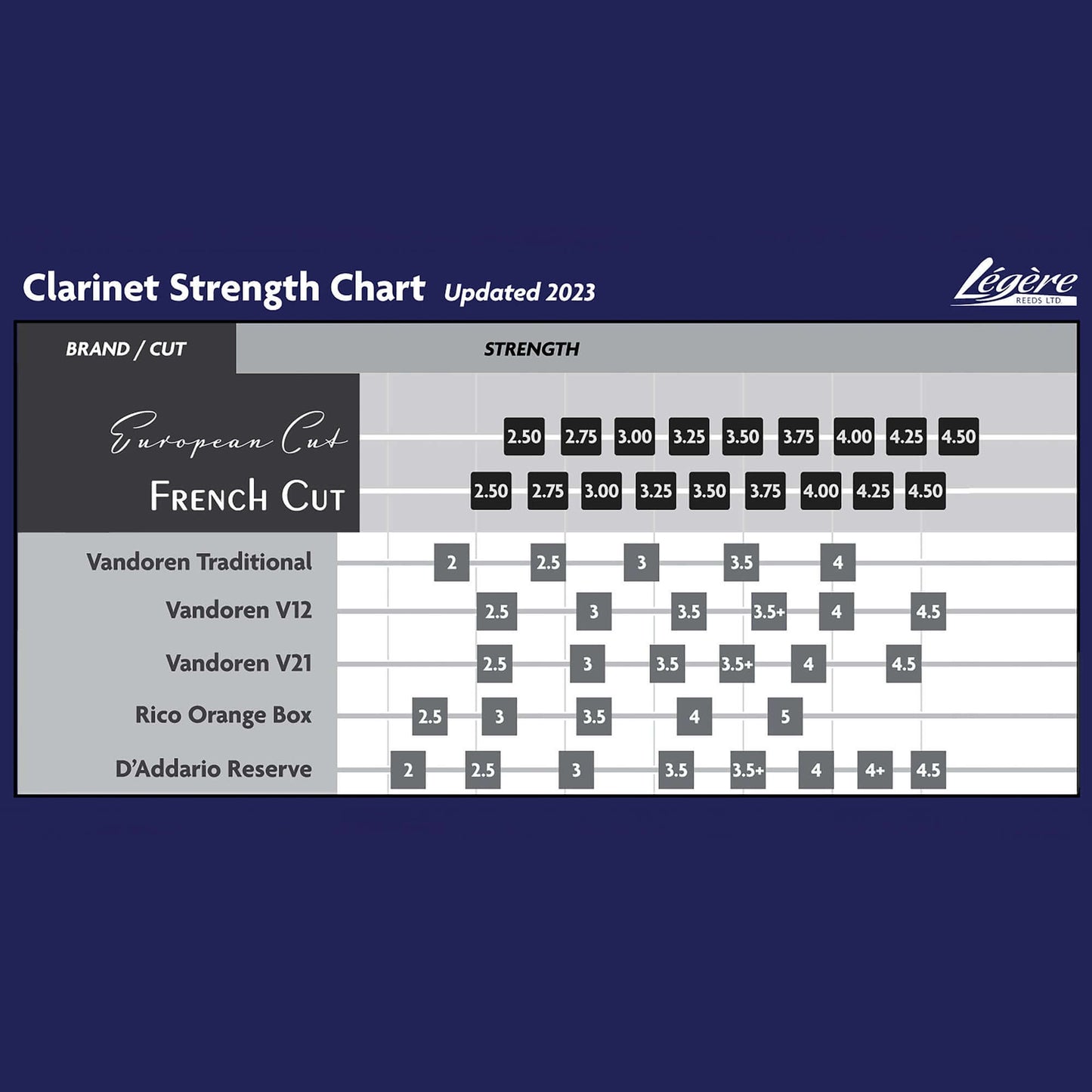
I play on a relatively resistant set-up... so maybe that's part of it (Royal Global MAX with a Vandoren B40). The French Cut in a 3.0 and the European Cut in a 2.75 are just right for me... as Mike says, the Euro runs just a touch harder. I have tried the French Cut in softer strengths, so it's not just about hardness. The cuts really do play differently for me.
After swearing I'd found "the reed," I now have a wonderful dilemma... two favorite reeds to choose from from!
Works great with my Vandoran B50
About one year ago, I began using Legere reeds in the European cut, and later the French cut. There were many reasons, but suffice to say that Leger reeds are one of the best makes of synthetic reeds available today--no matter the cut, be it European, French, Signature, American, or Classic. So here is the "good, bad, and ugly" of Legere reeds:. THE GOOD: Legere reeds are extremely consistent reed-to-reed, are available in quarter strengths, and play right out of the box with no adjustments needed. THE BAD: On a per reed basis, Legere reeds are expensive when compared to the cost of cane reeds. However, as Legere reeds play out of the box with no adjustment, and because of their longevity, much of that difference is eliminated in reality. THE UGLY: Because Leger reeds come in quarter strengths matching reeds to the mouthpiece will take more time, and could result in reeds purchased that are too strong or too weak. However, Legere does have an exchange policy to remedy some of guess work. But...once a player finds that perfect reed, the results can be amazing. While Legere reeds are my personal favorite synthetic reed, they may not be to everyone's taste in synthetic, or for those who prefer cane. All I can say is give Leger a try, and you may be surprised...