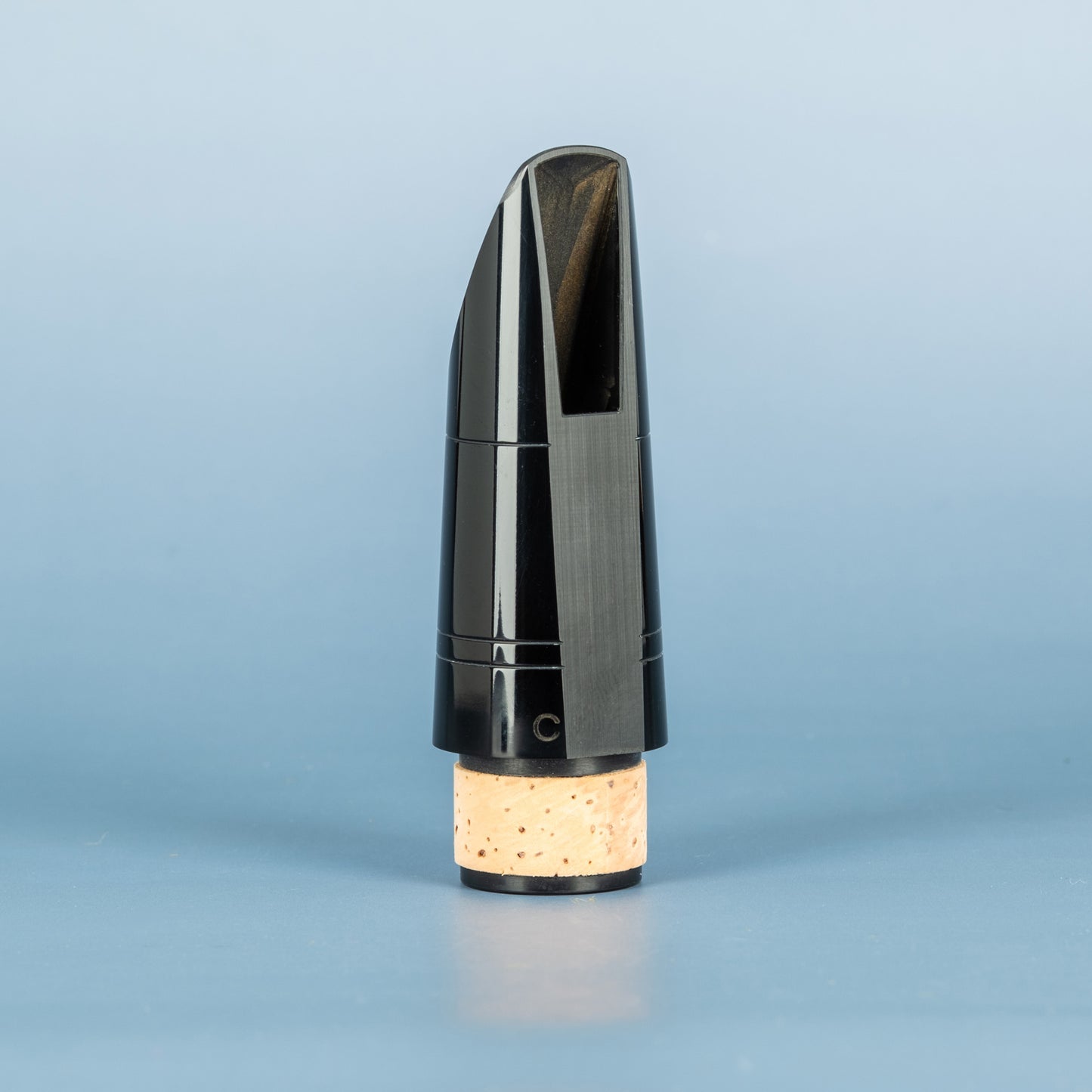
Seggelke Bb Clarinet Mouthpieces
Seggelke Bb Clarinet Mouthpieces
Jochen Seggelke has been making some of the most incredible clarinets in Europe for over 30 years. Based in Bamberg, Germany, the instruments they build under the Schwenk & Seggelke name are world-class. So when Jochen told me he was ready to release a clarinet mouthpiece line, I booked a flight. (Kidding, I was going anyway, but I brought some good reeds along.)
I think they're really lovely, and they worked well with a Vandoren 56 Rue LePic #3/3.5. That said, I'm going to record some music on all three of them, playing them with Seggelke's reeds on a Seggelke clarinet, so I get the "full experience" and post those recordings below shortly.
One thing I noticed when he opened the case that contained these mouthpieces was, how shall I put this...the scent. You know how quality rubber has this sulfur smell? Well, this, times 95 mouthpieces cooped up in a box for god-knows-how-long, made my eyes water. So I asked: what's up with the rubber in these? Answer: the hard rubber comes from the New York-Hamburger Gummi-Waaren Compagnie AG. This 150+ year old company has developed and patented their own rubber formula that's 100% natural, derived from natural rubber, sulfur, and linseed oil. Their mixture is subjected to a "prolonged vulcanization" process (essentially "baked" for many hours at high temperatures) which permanently cross-links the molecules into a dense, rigid state. Good stuff, Maynard.
So, Jochen starts with good rubber. But beyond that, in 1998 he developed a specific bore geometry he still uses: a parabolic taper at the entry (rather than a straight metric cone, which, as he'll tell you, is not ideal for a clarinet). He put that bore into everyone else's mouthpieces before he decided to put it in one with his name on it.
The manufacturing process is exactly what you'd expect from a workshop running a Datron 5-axis CNC mill: facing, chamber, and baffle are all machined with a level of precision that handwork alone can't guarantee. Then it's hand-sanded & polished, the bore is reamed, tenon cork added, then play-tested. This is not a fast process...
Three facings:
The design philosophy was restraint — just three facings, each targeting a different embouchure type, air pressure, and (Jochen's words) "hopefully not too much biting":
Facing A is the longest and most open: 21mm length, 1.25mm tip opening. More air, more dynamic range, more demand from your embouchure — but also more tonal palette to work with.
Facing B is the shortest and tightest: 17mm length, 1.15mm tip opening. Faster response, easier intonation security, slightly less flexibility. If your principal need is precision and consistency, this is the one.
Facing C is the one in the middle — Goldilocks style: 19mm facing length, 1.23mm tip opening. If you're unsure where you land, start here.
No se pudo cargar la disponibilidad de retiro